Gyro stabilizer
Pros
- Works at zero speed
- Fitted inside the boat
- Same force whatever the speed or wave period
Cons
- Force runs out at the end of its travel
- Must be much bigger and heavier to match fins at cruising speed
Vector Fins™ stabilizers cut the rolling, both when you're cruising and at anchor, for a calmer, safer ride. Supplied and supported in Batam.
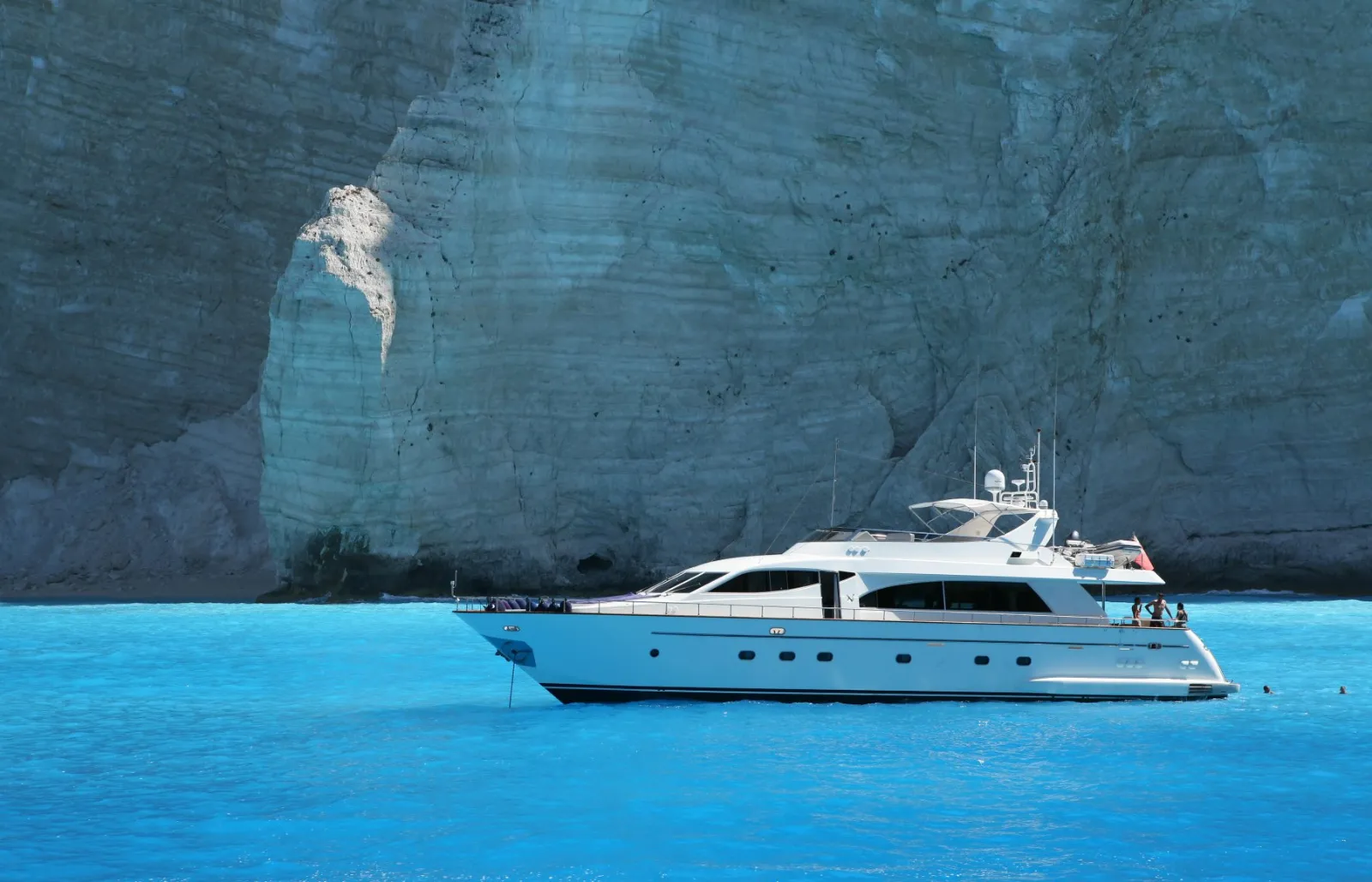
Stabilizers reduce the side-to-side rolling a boat makes in waves. Less roll means more comfort and more safety for everyone on board. Sleipner's system uses Vector Fins™: curved fins under the hull that work while you're cruising and when you're stopped at anchor.
Choosing
The right system depends on how you use your boat. Every stabilizer is limited by how much force it can create, so match it to the conditions you meet most.
Speed²
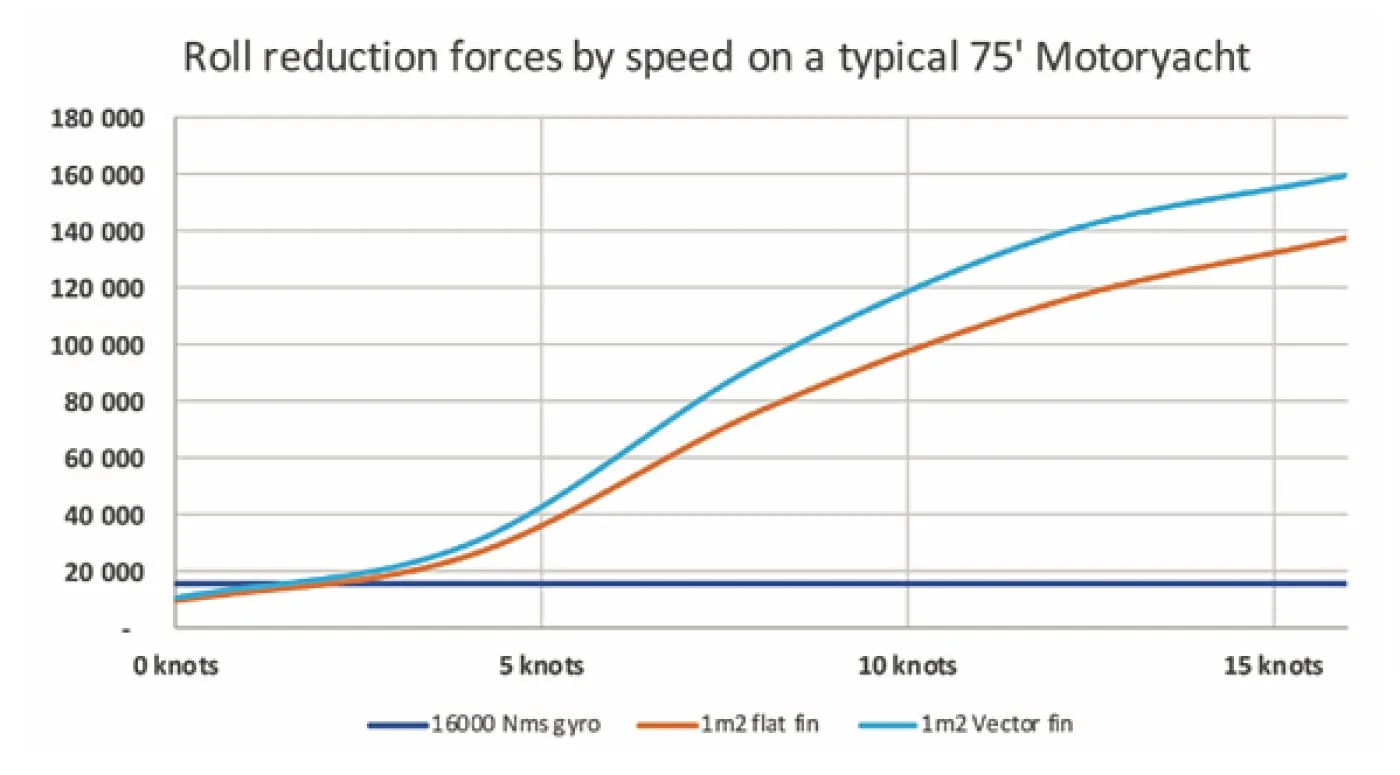
Underway, a fin's force grows with the square of the boat's speed: go twice as fast and it pushes four times as hard, for as long as the boat keeps moving.
Compare
A gyro sits inside the boat and resists roll with a spinning flywheel. Fins sit under the hull and push against the water. Here's how they compare, according to Sleipner.
Pros
Cons
Pros
Cons
Pros
Cons
Vector Fins™
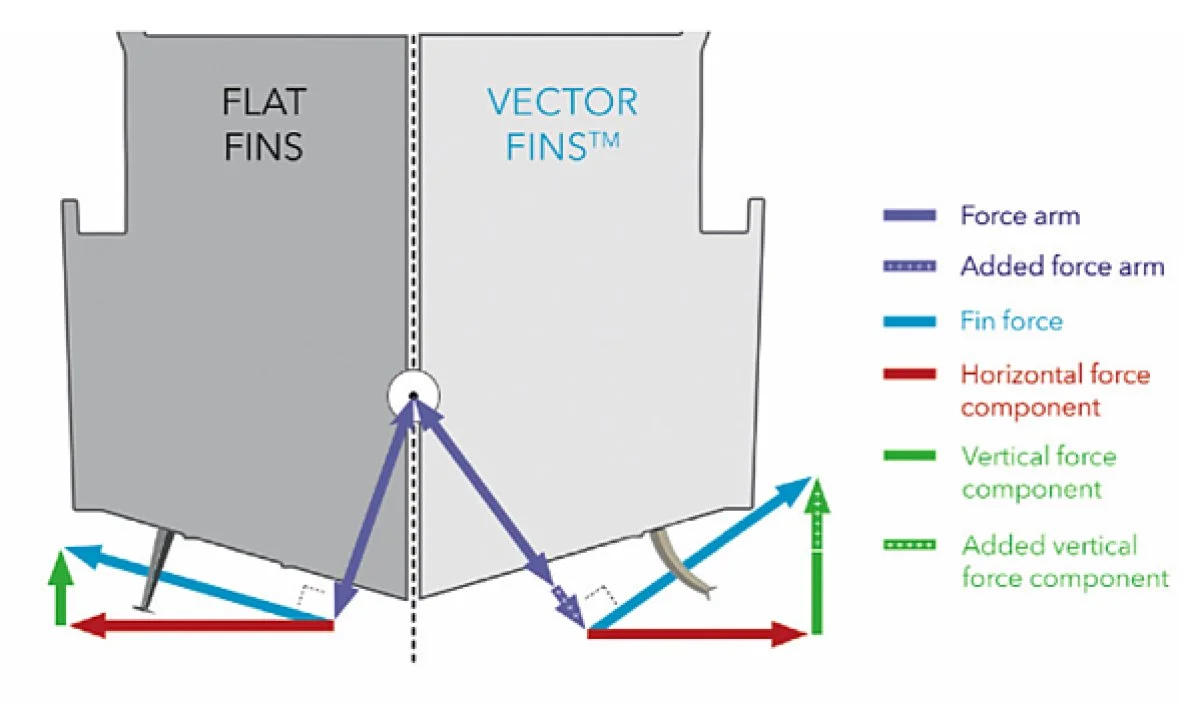
A flat fin pushes mostly sideways. Sleipner's Vector Fins™ are curved, which gives the fin a longer lever arm and adds an upward force, so the same fin area resists more roll. Sleipner says this makes them the only top-performing stabilizer for both cruising and at-anchor use.
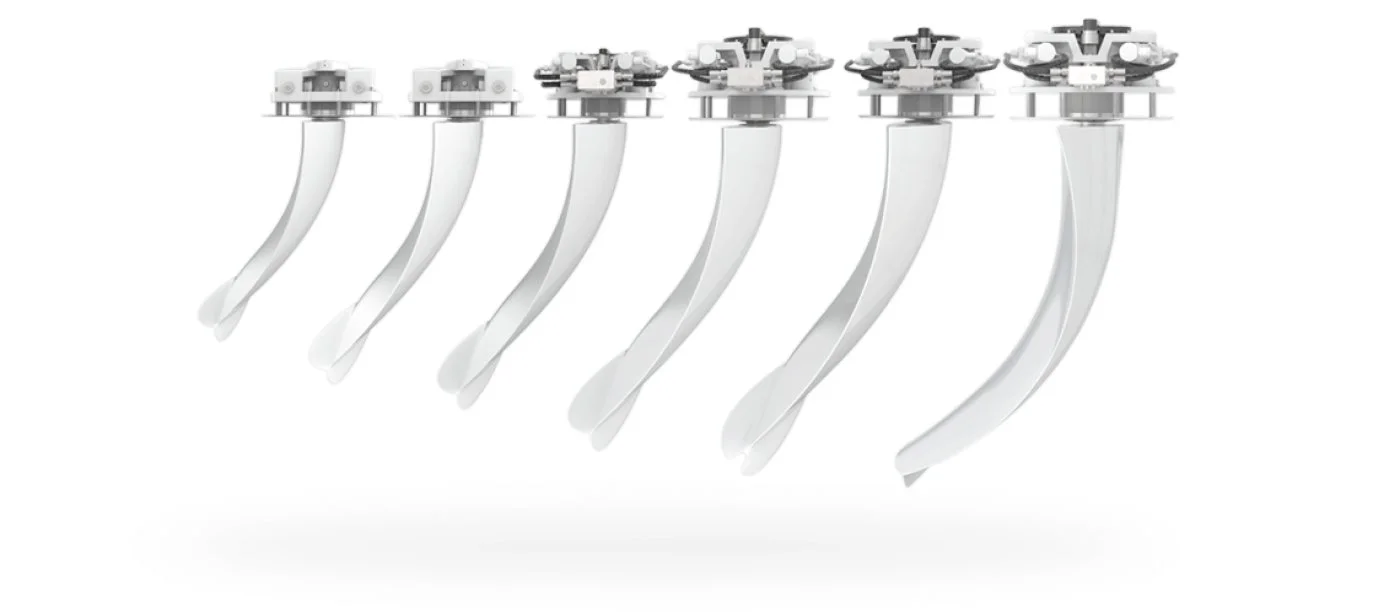
Components
Everything needed for a complete Sleipner stabilizer installation.
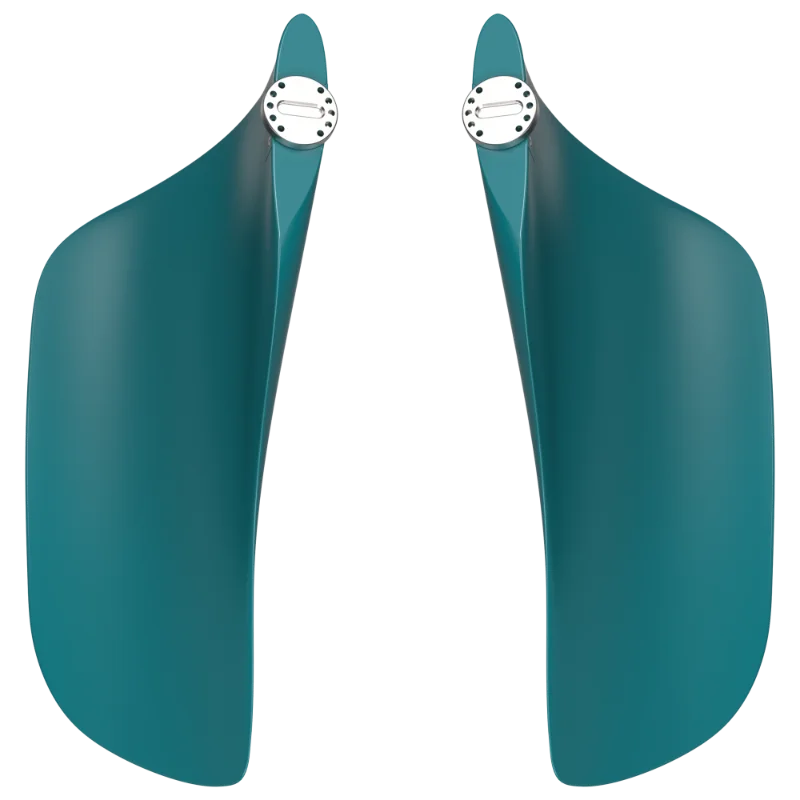
Curved fins, fitted in pairs under the hull.
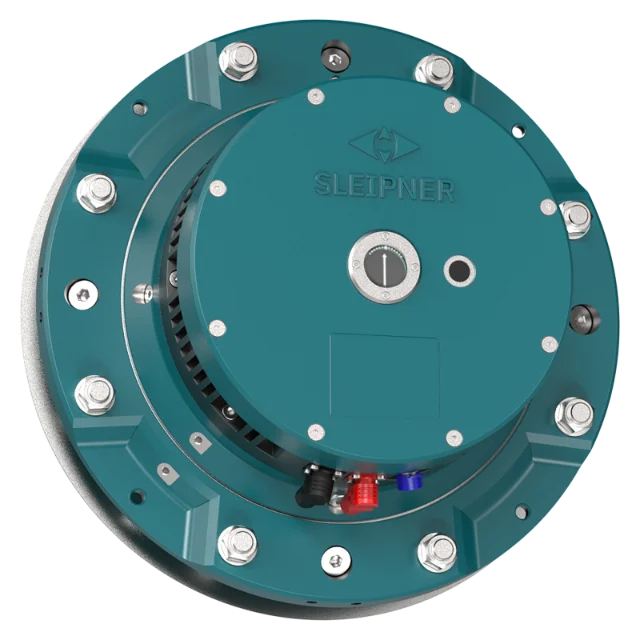
Mounted inside the hull to move the fins.
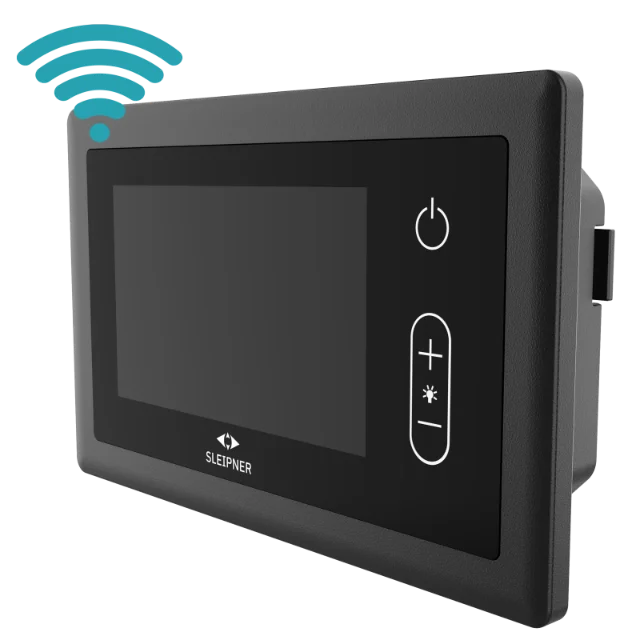
Switch the system on and adjust it from the helm.
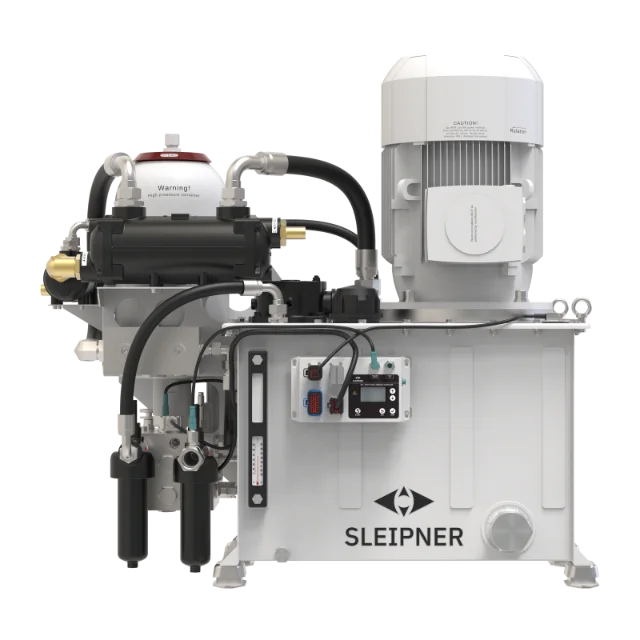
Supply hydraulic power to the system.
Accessories and spare parts are available too. Ask us what's in stock.