Sleipner thrusters

Bow and stern thrusters that push your boat sideways at the touch of a button, so you can dock calmly in wind and current. Supplied and supported in Batam.

  • Tunnel, retractable and external thrusters
  • Bow, stern or both
  • Electric and hydraulic drives
A clear blue-green ocean wave rising under a pale sky

Calm, controlled docking

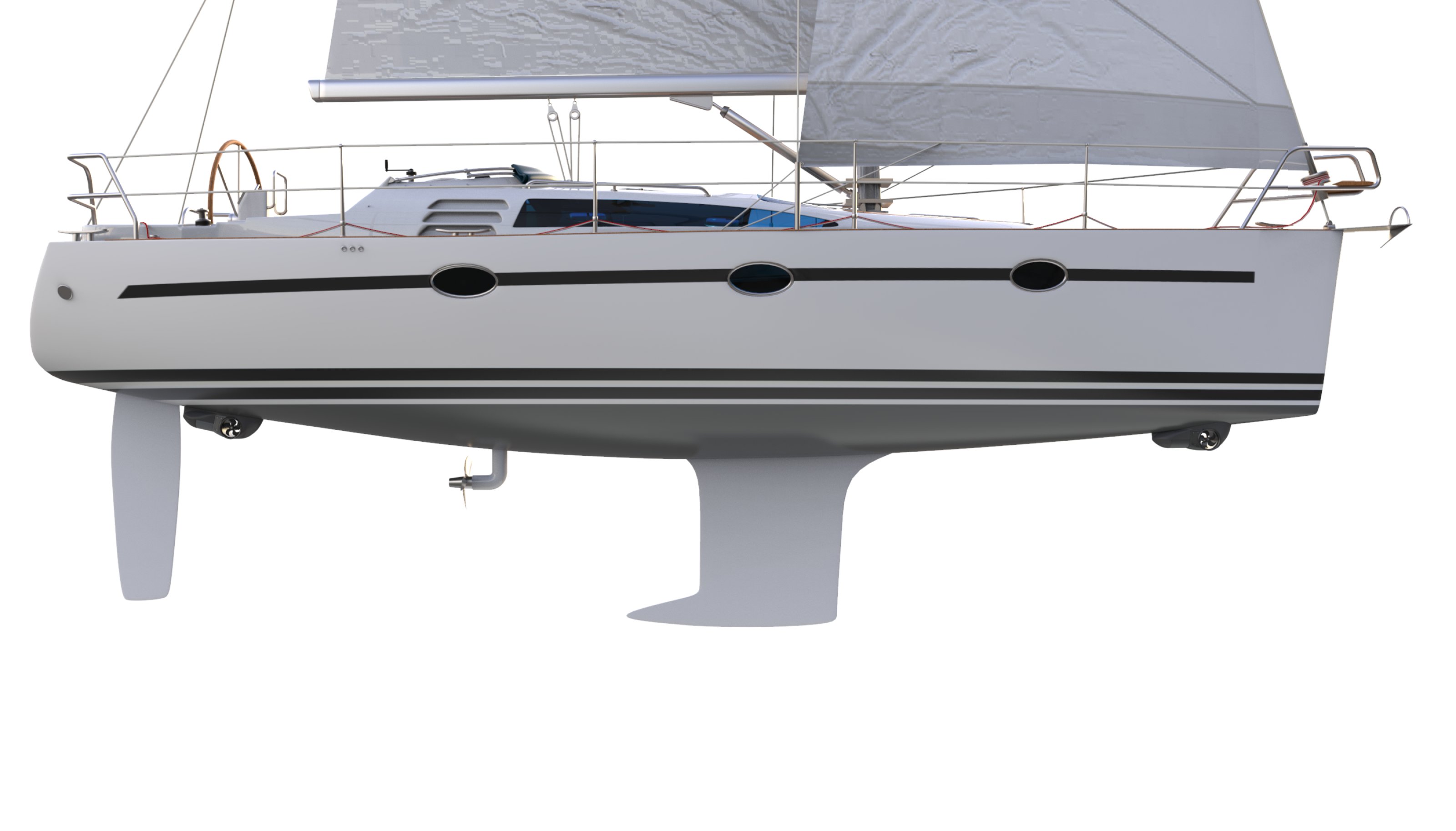
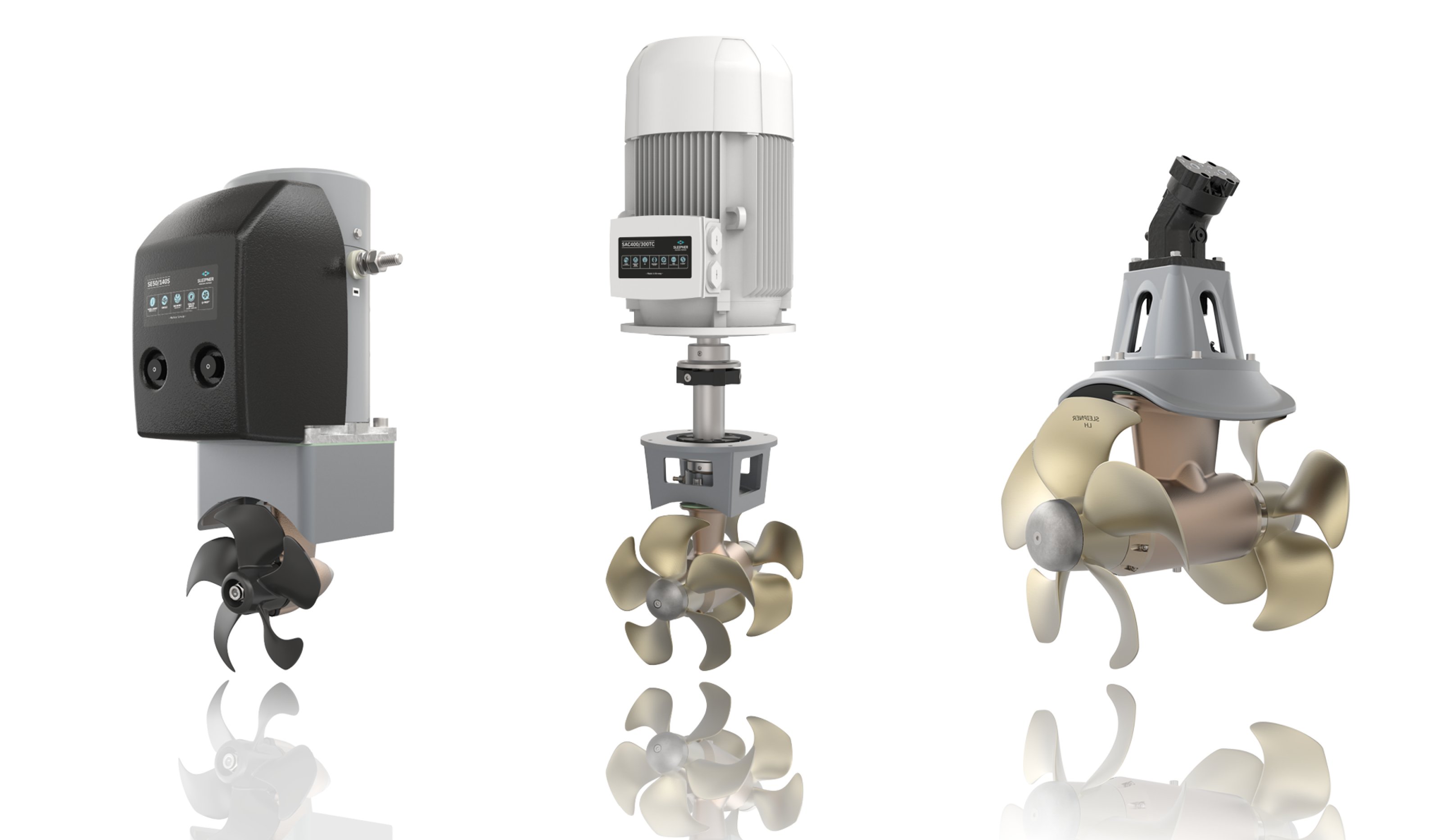
A thruster is a small propeller that pushes the boat sideways. Fitted at the bow, it swings the front of the boat; at the stern, it swings the back. With both, you can move the whole boat sideways into a tight berth. Sleipner makes thrusters for leisure boats and professional vessels, plus the control panels, installation parts and spare parts to go with them.

Bow thruster
Turns the bow left or right, the most common set-up.
Stern thruster
Turns the stern, for full control at both ends.
PRO models
Variable speed control for finer handling, ideal if you often dock on your own.
Parts and upgrades
Control panels, remote controls, tunnels, cables and spare parts.

Choosing the right size

Sizing

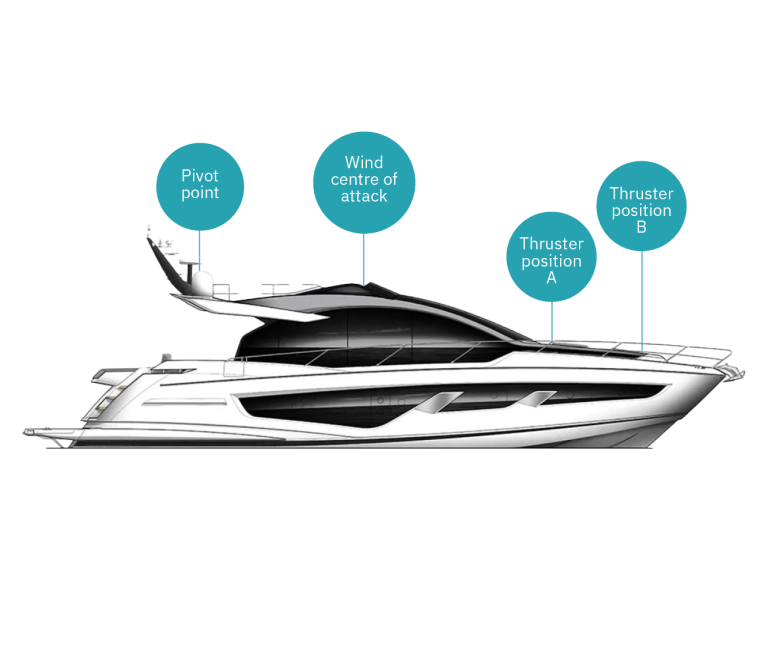
Thruster power depends more on the boat's design than its weight: how much of it catches the wind, where it pivots, and where the thruster can go.

19.5 knots

As a rule, choose a thruster that can hold the bow or stern against at least 19.5 knots of wind. A powerful set-up copes with 22 to 25 knots.

Diagram, seen from above: the boat's pivot point near the middle, and two tunnel positions A and B towards the bow, B further forward
The further the thruster is from the pivot point, the more leverage it has.
1Placement
Fit the thruster as far forward (or aft) as you can. Further from the boat's pivot point, the same thruster turns the boat with more force.
2Windage area
Work out the area of the hull and superstructure above the waterline, in square metres. That's what the wind pushes on. Strong currents in your harbour count too.
3Tunnel diameter
A bigger tunnel is more efficient: less noise and cavitation, and the motor works less hard for the same thrust. A small tunnel with a strong motor can be loud.
4Voltage
Cables, switches and fuses lose some voltage, so a 12 V thruster may only get 10 to 11 V. Plan on about 10.5 V, and for long cable runs fit a separate battery near the thruster.
Example from Sleipner's sizing guide: the wind speed each tunnel thruster can hold the bow against, on the same boat, at position A and further forward at position B.
ThrusterPosition APosition B (further forward)
Electric tunnel thruster, 130 kg thrust21.2 knots22.4 knots
Electric tunnel thruster, 170 kg thrust23.9 knots25.2 knots

No good place for a tunnel? A retractable or external thruster can do the job instead.

Four ways to fit a thruster

Thruster types

The right type depends on your hull and how much room you have inside.

Diagram: a tunnel through the bow below the waterline with a propeller in the middle

Tunnel thruster

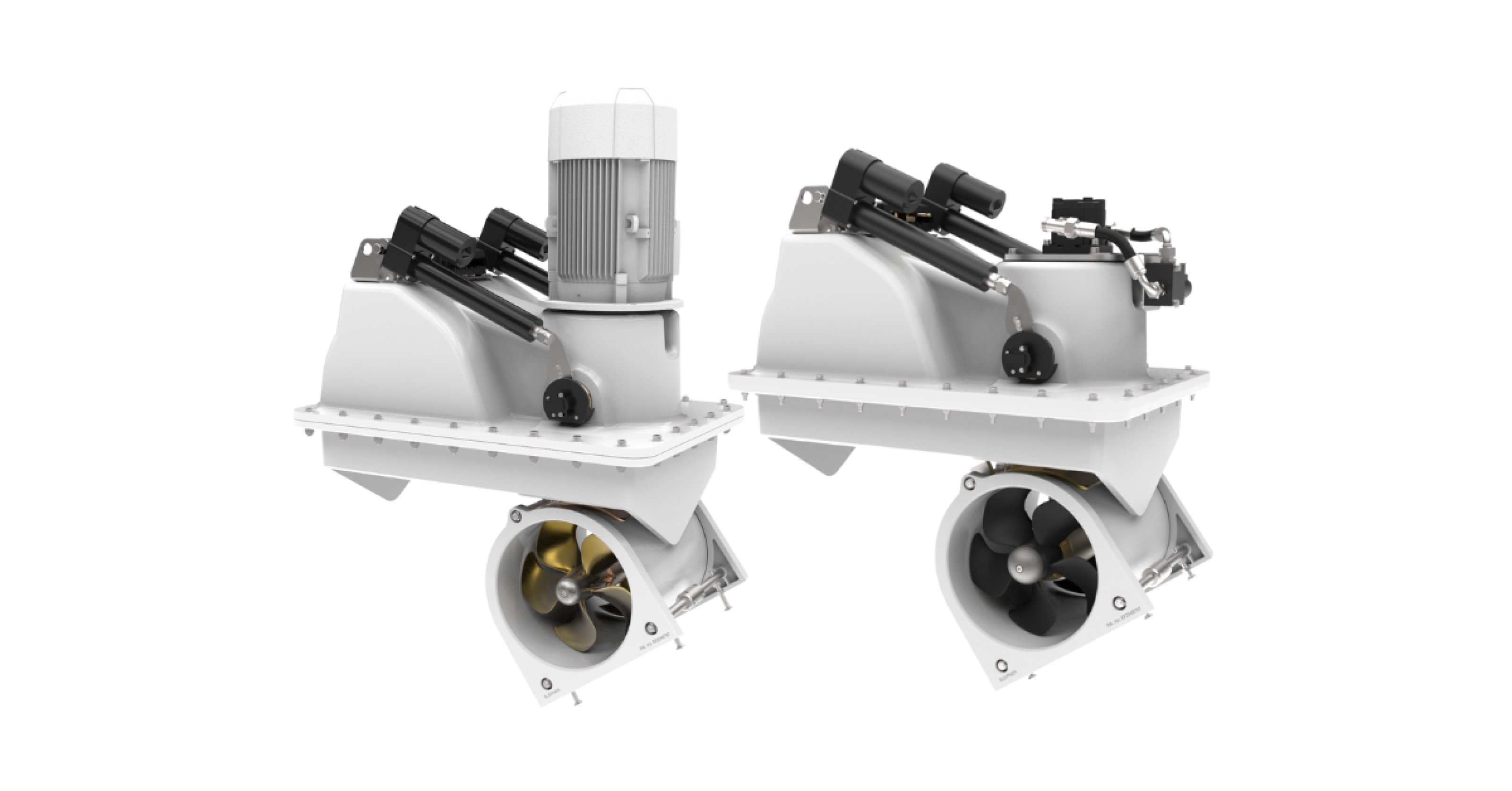
A propeller in a tube through the hull below the waterline. Still the most popular choice, with the widest range and good value.

Pros

  • Solid build with few moving parts
  • Wide range to choose from, good value
  • Motor and coupling can be serviced without lifting the boat
  • No loss of speed when installed correctly

Cons

  • Needs fibreglass work; professional fitting strongly recommended
  • Needs enough room inside the hull
  • The tunnel must sit ½ to 1× its diameter below the waterline
  • Can be noisy unless installed well
Diagram: a thruster lowered on a leg below the keel, with its folded-away position shown inside the hull

Retractable thruster

Drops out of the hull when you need it and folds away when you don't. Fits at the bow or the stern.

Pros

  • Pushes from deeper water with a short tunnel, so it's efficient
  • Often very quiet or silent
  • Some models protect against grounding

Cons

  • More complex build
  • Takes more room inside the boat
  • Short delay while it lowers
  • Easier to damage while it's down
Diagram: a torpedo-shaped thruster mounted under the hull with propellers at both ends

External thruster

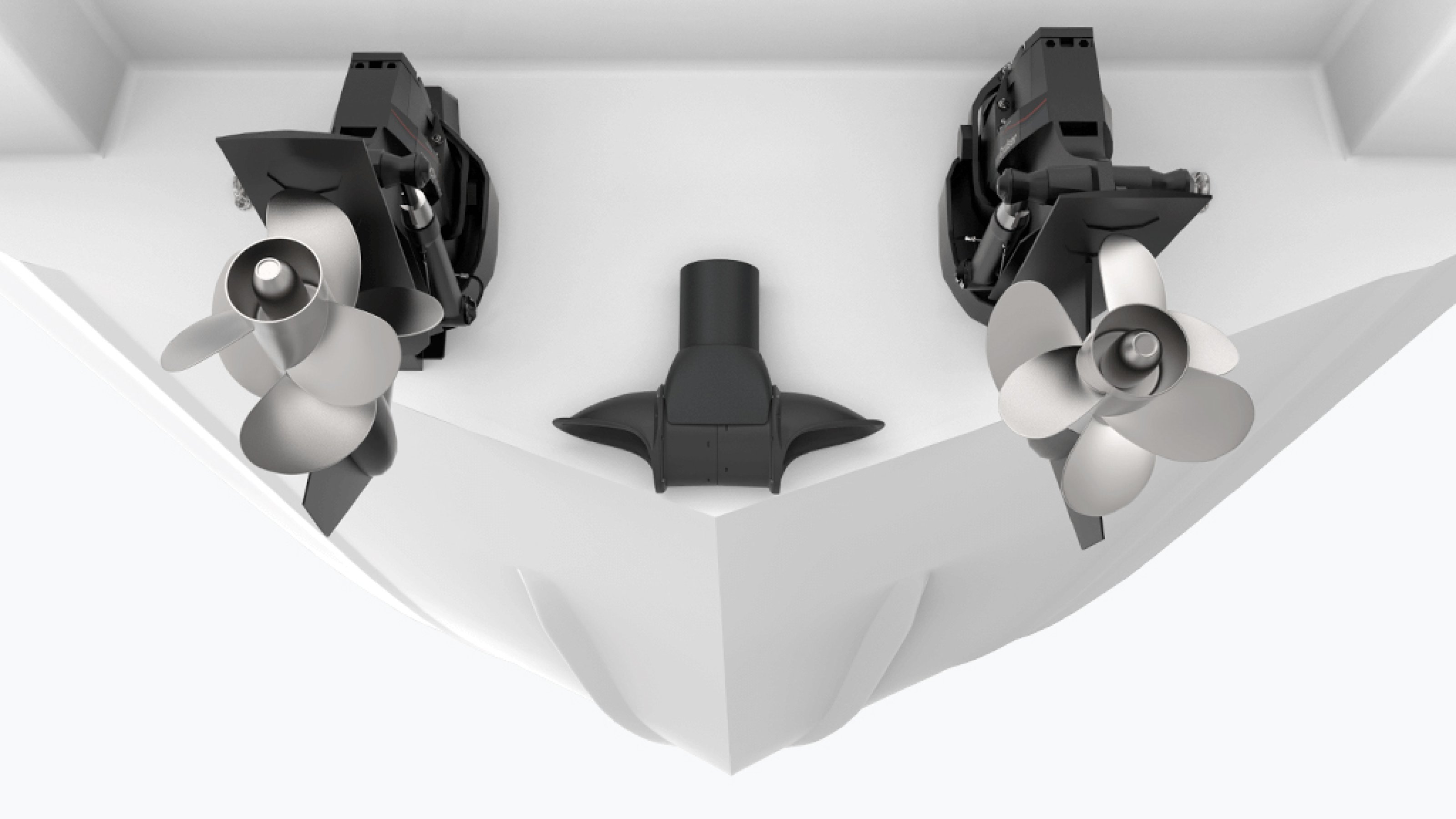
A torpedo-shaped unit mounted under the hull. A well-designed one adds about as much drag as a folding propeller on a sailboat.

Pros

  • Needs almost no room inside
  • Quick, easy install, good for existing boats
  • Quiet, and water-cooled for long run times
  • Can also go at the stern, or in pairs for more thrust

Cons

  • Not for planing hulls
  • Take care when lifting out, launching or storing ashore
Diagram, seen from behind: a thruster bolted to the transom below the waterline

External stern thruster

Bolts to the transom with just three small holes and no fibreglass work. Optional cowls direct the water flow, and guard grids are available for swimming and water sports.

Pros

  • Needs almost no room inside
  • Fast, easy to add to an existing boat
  • Quiet, and water-cooled for long run times

Cons

None listed by Sleipner.